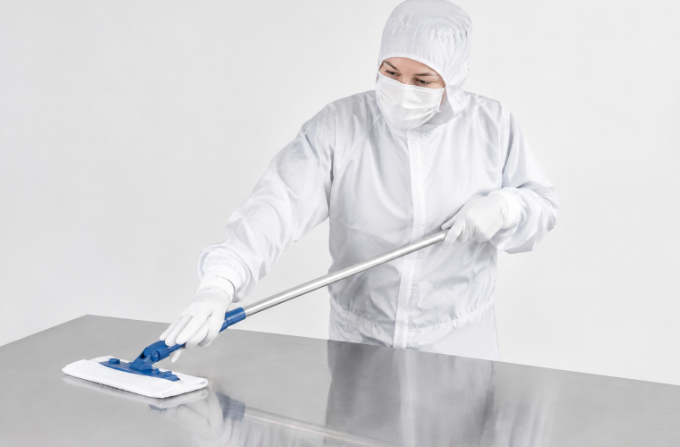

Key Takeaways
- Cleanroom cleaning is a contamination-control activity, not routine janitorial work.
- Cleanroom Facility Services offers GMP cleaning, disinfecting, certification, testing, environmental monitoring, cleanroom mops, and cleanroom vacuums.
- Effective cleaning plans account for room use, traffic, surfaces, chemicals, tools, records, and monitoring results.
- Cleaning support should work alongside each facility’s quality, validation, production, and regulatory responsibilities.
Cleanroom Facility Services helps California facilities maintain controlled environments through specialized cleaning, disinfecting, certification, testing, and environmental monitoring. For organizations preparing a cleanroom cleaning in CA, the goal is not simply to make a room look clean. It is to use disciplined procedures that help control particles, residues, microorganisms, and other conditions that can affect sensitive operations.
Pharmaceutical, medical-device, food, laboratory, and research environments have needs that ordinary janitorial cleaning may not address. A cleanroom program requires appropriate tools, trained personnel, controlled materials, documented work, and service plans that reflect the facility’s specific classification, processes, surfaces, and operational schedule.
Why California Facilities Need Specialized Cleanroom Cleaning
People, garments, packaging, equipment, tools, dust, residues, and improperly handled cleaning supplies can introduce contamination into controlled environments. In sensitive facilities, those conditions can create avoidable quality issues, disrupt work, or complicate investigations. Specialized cleaning helps establish a repeatable approach to floors, walls, ceilings, equipment exteriors, work surfaces, ledges, corners, and other defined areas. The current cleanroom housekeeping guidance from IEST describes housekeeping as part of an overall contamination-control program and addresses cleaning procedures, sanitization, monitoring, residue, coverage, frequency, and recovery planning.
How Cleanroom Facility Services Approaches Controlled Cleaning
A practical cleanroom service plan begins with an understanding of the facility, rather than a generic checklist. Cleanroom Facility Services can review the room classification, industry, operating schedule, traffic patterns, surface materials, existing procedures, and contamination concerns before defining the appropriate scope.
- Facility review: Identify room use, access limits, equipment, surfaces, and production restrictions.
- Protocol alignment: Follow or help support procedures that align with the facility’s GMP, quality, safety, and controlled-environment requirements.
- Controlled cleaning: Use cleanroom-appropriate mops, vacuums, wipes, chemicals, and personal protective equipment.
- Disinfection: Apply disinfectants according to product directions, required contact time, surface compatibility, and site procedures.
- Verification: Support the process with testing, environmental monitoring, documentation, and certification services where needed.
Services Available From Cleanroom Facility Services
- GMP cleanroom cleaning: Routine or specialized cleaning for controlled areas using defined procedures and appropriate materials.
- Cleanroom disinfecting: Surface-focused disinfecting that considers product selection, application method, dilution, compatibility, and contact time.
- Cleanroom certification: Certification support to help verify cleanroom performance against applicable requirements.
- Testing services: Objective measurement activities that can support facility, engineering, and quality teams.
- Environmental monitoring: Ongoing monitoring support that can help identify meaningful trends in facility conditions.
- Cleanroom mops and vacuums: Equipment intended for controlled environments, helping facilities avoid using unsuitable cleaning tools.
Supporting GMP and Contamination Control
Cleaning procedures should be written, repeatable, and appropriate for the room and process. Frequency should reflect factors such as production activity, surface type, traffic, contamination risk, and monitoring findings. Chemical handling matters as well. Incorrect dilution, incompatible products, reused materials, or insufficient contact time can undermine otherwise careful work. General cleaning principles also reinforce the need for facility-specific planning. The CDC explains that surface type, frequency of contact, and product instructions should be considered when cleaning and disinfecting. Cleanrooms require the added discipline of site procedures, material controls, gowning expectations, and quality documentation. Cleanroom Facility Services can support these operational needs, but it does not replace the facility’s quality unit, validation program, regulatory review, or responsibility for final procedural approval.
Problems Caused by Inadequate Cleanroom Cleaning
Poorly controlled cleaning can leave behind particle buildup, chemical residue, or missed areas around equipment bases, corners, ledges, and high-contact surfaces. Cross-contamination can also occur when wipes, mop heads, buckets, vacuums, or solutions are not managed in accordance with established procedures. Documentation gaps create a separate concern. Without clear records showing what was cleaned, when it was completed, which materials were used, and whether issues were identified, facility teams may have less information for investigations, corrective actions, or trend reviews.
What a Cleanroom Cleaning Program Should Track
Facility managers should maintain records that are useful for both day-to-day control and continuous improvement. Important information may include:
- Cleaning dates, times, rooms, tasks, technicians, and supervisor review.
- Disinfectant product, dilution, expiration status, contact time, and compatibility considerations.
- Particle counts, microbial results, pressure, temperature, humidity, or other site-specific environmental data where applicable.
- Deviations, observations, probable causes, corrective actions, completion dates, and verification steps.
- Recurring patterns, including repeated residues, missed tasks, elevated results, or locations requiring procedural changes.
How to Compare Cleanroom Cleaning Providers
When evaluating a provider, look beyond availability and price. Ask whether the company focuses on controlled environments, understands GMP cleaning and disinfection, uses appropriate supplies, and can work within gowning, access-control, and material-management procedures.
Questions to Ask Before Scheduling
- Which cleanroom classifications and industries can the provider support?
- How will the cleaning plan account for surfaces, equipment, traffic, and production windows?
- What records, reports, testing, certification, or monitoring support are available?
- How are technicians prepared for cleanroom conduct, site access, and facility procedures?
- How are recurring findings or contamination concerns communicated to facility teams?
What to Include in a California Service Request
A useful request includes the facility location, industry or application, cleanroom classification, approximate square footage, current cleaning frequency, requested services, production restrictions, and documentation requirements. It should also identify known contamination concerns and whether certification, testing, or environmental monitoring is needed.
Conclusion
Cleanroom Facility Services offers a focused option for California organizations needing specialized support for cleanroom cleaning, disinfecting, certification, testing, and environmental monitoring. Maintaining a controlled environment requires more than routine cleaning because even small inconsistencies in procedures, equipment, or personnel practices can affect cleanliness and operational requirements. A strong service plan starts with accurate facility information, clearly defined procedures, suitable tools, trained personnel, and records that help teams understand and improve controlled-environment conditions. It should also account for the facility’s industry, cleanliness classification, equipment, and applicable regulatory or industry standards. Regular monitoring and documented inspections can help identify potential issues early, while consistent cleaning schedules support day-to-day operations. Communication between facility managers and service providers is equally important, particularly when procedures change or testing identifies areas that need attention. By establishing clear expectations and reviewing performance over time, California organizations can make more informed decisions about cleanroom maintenance, support compliance efforts, and maintain processes suited to their specific operational needs.